Growing women’s confidence and income through dairy processing.
In the arid, mountainous province of Daykundi, life has always been difficult, but in recent years, given the ongoing economic crisis, high unemployment rates and food insecurity, families across the province have found it even more challenging to make ends meet.
The rugged terrain and isolated nature of Daykundi province makes it incredibly difficult for households to access vital services, including markets, making it difficult to obtain nutritious food, or sell their own agricultural produce to earn an income.
The rugged terrain and isolated nature of Daykundi province makes it incredibly difficult for households to access vital services, including markets, making it difficult to obtain nutritious food, or sell their own agricultural produce to earn an income.
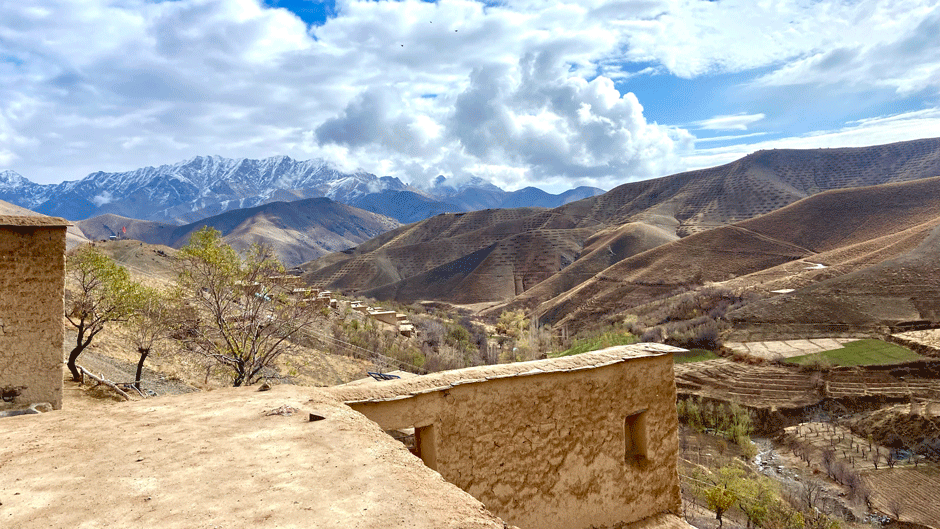
The mountainous and isolated province of Daykundi.
A recent survey conducted by Afghanaid highlighted that 60% of households are unable to meet their basic food needs in the region and are living below the poverty line.
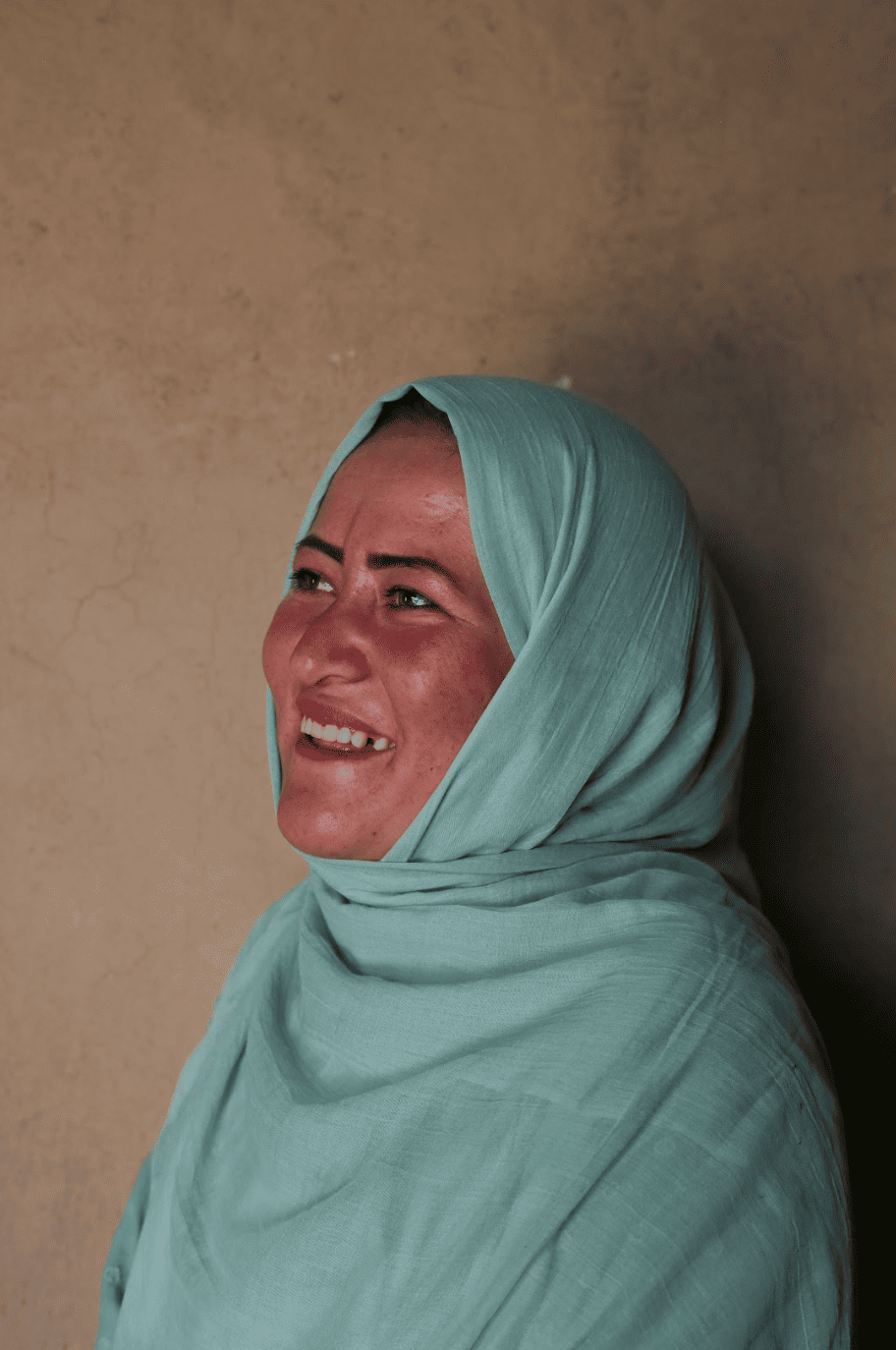
Twenty-one-year-old Masoma, who lives with her all-female family in the village of Fati-Mohammad, experiences these monumental challenges first hand.
For as long as she has been able, Masoma has worked hard to earn an income for her family: tending apple and almond trees, growing fruit and nuts to sell at market. However, recent droughts have meant her yields have been less than expected, and because of restrictions on women travelling in Afghanistan, she has been very limited in where she can sell them.
As a result, Masoma struggled to earn the equivalent of £28 (2,000 AFN) a month, an insufficient amount to meet the basic needs of her family. With Afghan women unable to attend school or university, and confined to their communities, Masoma did not know how to improve her family's situation.
For as long as she has been able, Masoma has worked hard to earn an income for her family: tending apple and almond trees, growing fruit and nuts to sell at market. However, recent droughts have meant her yields have been less than expected, and because of restrictions on women travelling in Afghanistan, she has been very limited in where she can sell them.
As a result, Masoma struggled to earn the equivalent of £28 (2,000 AFN) a month, an insufficient amount to meet the basic needs of her family. With Afghan women unable to attend school or university, and confined to their communities, Masoma did not know how to improve her family's situation.

I am very happy that I can now support myself. Afghanaid and AVAAZ taught us everything we need to know to make a sustainable business.
When Afghanaid visited Masoma’s village, she eagerly enrolled in our project, funded by AVAAZ, to enhance rural people’s resilience to economic and climate-induced shocks.
The project supported Masoma and 99 other vulnerable women to become dairy farmers, a trade more resilient to drought and the changing climate.
These women were provided with milk-producing livestock, dairy production kits, packaging and labelling supplies, and training on how best to look after their animals and how to make dairy products to a high standard.
The project supported Masoma and 99 other vulnerable women to become dairy farmers, a trade more resilient to drought and the changing climate.
These women were provided with milk-producing livestock, dairy production kits, packaging and labelling supplies, and training on how best to look after their animals and how to make dairy products to a high standard.
.jpg)
To ensure Masoma and her peers could reach customers and sell their dairy products, Afghanaid linked them to nearby markets where they exhibited their fresh, local products, and encouraged shopkeepers to support the local economy by stocking their products.
The women were subsequently given further training in business management, to ensure they had the knowledge required to make their businesses a success.
“I have learnt so much from the training,” Masoma told us, “How to make pudding, qorot [a local dairy product], cream and butter; I learnt how to label them and how to make them according to standard, both in weight and quality, and how to sell to local traders. Now I have started sell my own products, I am earning 10,000 AFN (£110) monthly! "
The women were subsequently given further training in business management, to ensure they had the knowledge required to make their businesses a success.
“I have learnt so much from the training,” Masoma told us, “How to make pudding, qorot [a local dairy product], cream and butter; I learnt how to label them and how to make them according to standard, both in weight and quality, and how to sell to local traders. Now I have started sell my own products, I am earning 10,000 AFN (£110) monthly! "
I was selected for such an amazing project. It helped me not only to survive, but to also be a self-sufficient woman!